How to Choose a Pop-Up Venue in Tokyo
A famous Tokyo neighborhood is not automatically the right pop-up location. Korean brands should match area and venue type to price position, target customer, sales objective, PR objective and desired brand experience. Shibuya, Harajuku, Omotesando, Shinjuku and Daikanyama each support different visitor contexts.
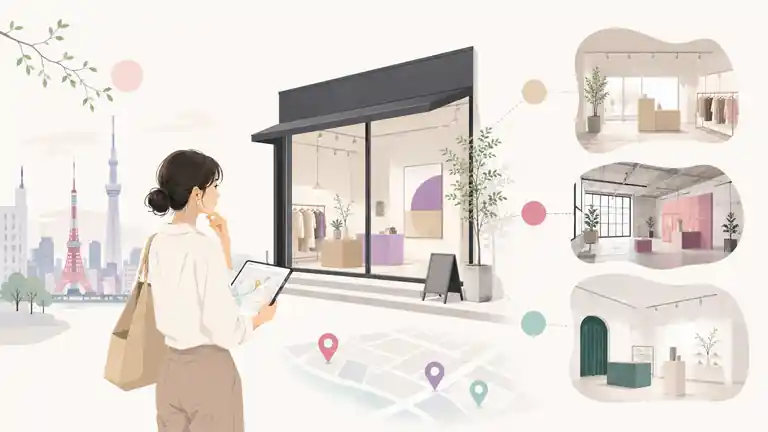
- 01
Prioritize target-customer fit over footfall alone
- 02
Street spaces, malls and department stores create different traffic and operating conditions
- 03
Compare area, venue type, specifications and cost on the same framework
Choose a Tokyo pop-up venue from the target customer
Set target customer, price position, sales vs PR objective, required floor area and event duration before evaluating venues.
Shibuya offers broad youth traffic and major malls, Harajuku suits fashion and experiential concepts, Omotesando can support premium brand positioning, Daikanyama offers a quieter lifestyle context, and Shinjuku provides broad access and retail density. Validate the actual audience at the facility level.
Do not choose from neighborhood stereotypes alone. Define price point, customer age, visit purpose, dwell time and whether the event needs discovery from people who do not yet know the brand. Customer context varies even within the same district.
Street spaces, retail facilities and department stores
They offer creative freedom and work well for invitation events and shoots, but brands may need to generate much of the traffic themselves.
These provide access to existing shoppers and can help establish sales records, but require compliance with facility rules for hours, checkout, commissions, construction and delivery.
Street spaces offer more control over the environment but require self-generated traffic. Retail facilities provide existing footfall with more operational constraints, while department stores add commercial credibility but typically require more transaction and delivery preparation.
How to compare candidate venues
They can add credibility and purchase-intent traffic but usually involve more product review, commercial and delivery requirements.
Check floor area, ceiling, power, lighting, storage, fitting rooms, inventory, checkout, internet, loading access, hours, event permissions, signage and photography rules.
Compare rent alongside customer profile, natural traffic, opening hours, build restrictions, payment setup, storage, load-in, filming and event permissions. A prestigious location is not automatically valuable if it does not serve the event objective.
Related specialist guides
Go deeper on the parts of this topic that matter to you