What Is a Micro-Influencer? Costs and Selection Guide
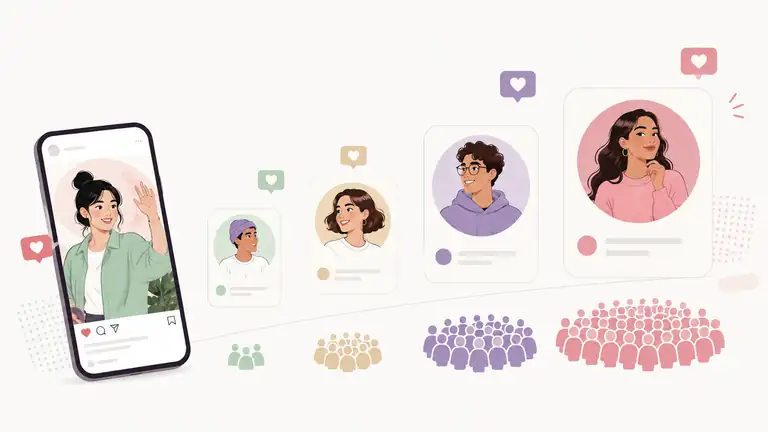
Influencers are often grouped by audience size using labels such as nano, micro, mid-tier, macro and mega. A micro-influencer generally sits in the smaller-to-middle part of that spectrum, but there is no universal follower-count boundary. The useful question is not the label itself, but who the creator actually influences.
- 01
Understand the overall creator-size spectrum first
- 02
Micro-influencers are valuable for focused communities, not simply because they are smaller
- 03
Select creators by real audience fit rather than follower count alone
First: what are the main influencer size tiers?
Creators are often described as nano, micro, mid-tier, macro or mega based on audience size. The exact boundaries differ across platforms and companies, so the labels should be treated as rough categories rather than fixed rules.
Smaller creators often have a more focused topic or community, while larger creators can create broader reach quickly. Neither is automatically better; the right tier depends on the campaign goal.
So what is a micro-influencer?
Micro-influencers are usually smaller than major celebrity creators and often build their audience around a specific subject such as fashion, beauty, food, parenting or technology.
Their advantage is not simply lower cost. They can introduce a product inside a familiar content context to people who already care about that subject.
If the main objective is maximum reach in a single moment, a larger creator may be a better fit. Micro-influencers are particularly useful for focused reach and testing multiple audience segments.
What kinds of brands and products fit micro-influencers?
They work well for products aimed at specific interests, including fashion, beauty, food, travel and specialist hobbies, especially when explanation or demonstration helps the product make sense.
They are also useful when a brand is still learning which customer segment responds best. Several smaller tests can reveal stronger audience fit before concentrating more budget.
How do you find and choose micro-influencers?
Use platform search, hashtags, adjacent brand content and the communities around relevant posts to build a candidate list. Then review normal content, average performance, comments and sponsorship frequency.
The most important question is whether the creator's real audience overlaps with the people likely to buy the product. Follower count alone cannot answer that.
How should cost and creator volume be planned?
Pricing depends on platform, format, production effort, guaranteed posting and whether the brand can reuse the creator's content in ads or other channels, not just on follower count.
More creators also mean more outreach, shipping and monitoring. Start with a manageable test group and expand the creator types that produce the strongest response.
Related specialist guides
Go deeper on the parts of this topic that matter to you